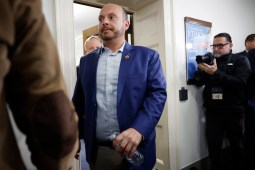
Congressman James Walkinshaw, D-Va., speaks at a press conference with other Democratic members of House Homeland Security Committee (including Sri Thanedar, D-Mich., left, and Bennie Thompson, D-Miss., right) on the killing of Renee Good, outside the U.S. Capitol on January 14, 2026. (Photo by Nathan Posner/Anadolu via Getty Images)
After the exit of around 1,000 CISA workers, legislation from three top House Democrats orders a force structure assessment like that more common to military branches.
Ted Schlein (left), chairman and founding general partner at Ballistic Ventures, talks with former NSA directors (left-right) Gen. Keith Alexander, Gen. Mike Rogers, Gen. Paul Nakasone, and Gen. Tim Haugh at the RSAC 2026 Conference in San Francisco, Calif. (Photo Courtesy of RSAC Conference)
A systemic numbness to cyberattacks has exposed the U.S. economy and its institutions to ever-widening threats. Retired four-star military officials worry the worst day in cyber is…
Hackers have cut their attack timelines from weeks to hours while the government spreads resources too thin. We need to stop pretending we can protect everything and…
Top security leaders at some of the largest tech and cybersecurity vendors said public-private collaborative work continues, despite budget cuts and personnel changes.
Reps. Andrew Garbarino and Eric Swalwell said legislative priorities include an expiring information-sharing law and making a threat information-sharing organization permanent.
The idea behind the initiative, details of which CyberScoop is first reporting, is that too much cyber expertise doing volunteer work is uncoordinated.