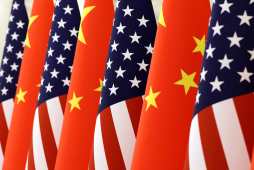
BEIJING, CHINA – MAY 14: The U.S. and Chinese national flags are seen during a state banquet hosted by Chinese President Xi Jinping at the Great Hall of the People on May 14, 2026 in Beijing, China. (Getty Images)
Cybersecurity firm Proofpoint said TA419 impersonated officials and AI industry figures in an effort to gain access to cloud accounts held by U.S. think tank, university and…
The report details a Russian-aligned espionage campaign against more than 20 organizations, an exploit foundry run by Chinese undergraduates and ShinyHunters-affiliated breaches, among other disrupted operations.
Multiple China-aligned threat groups exploited the defects quickly to target various organizations. Proofpoint said the activity is ongoing and expects it to widen.
The full hacking suite, seized by authorities, allowed Chinese government funded attackers to intrude highly sensitive networks undetected for more than eight years.
Laundry Bear exploited a zero-day vulnerability for five months before it was patched in November 2025, and the group is still actively exploiting vulnerable environments.
The revelation mirrors an alarming pattern of Chinese espionage groups dropping backdoors into critical infrastructure to intercept research and steal data with national security implications.
Xu Zewei was allegedly directed by China’s intelligence services to conduct a sweeping espionage campaign to steal data on COVID-19 research and other U.S. policy interests.
Forest Blizzard, a threat group attributed to Russia’s GRU, hijacked network traffic to steal credentials and tokens for Microsoft accounts and other services.
It’s been difficult early on to separate signal from noise, even if the attack on the medical device maker looks like a qualified success for the attackers.